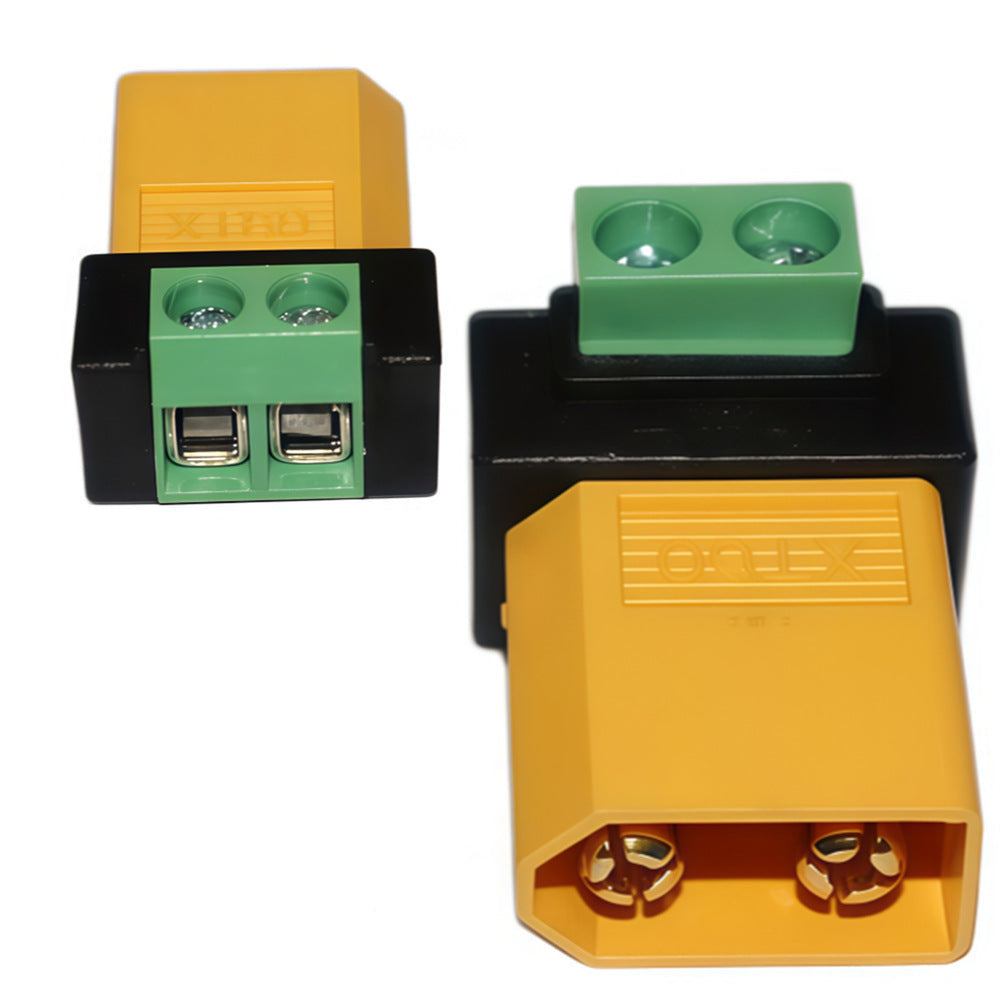
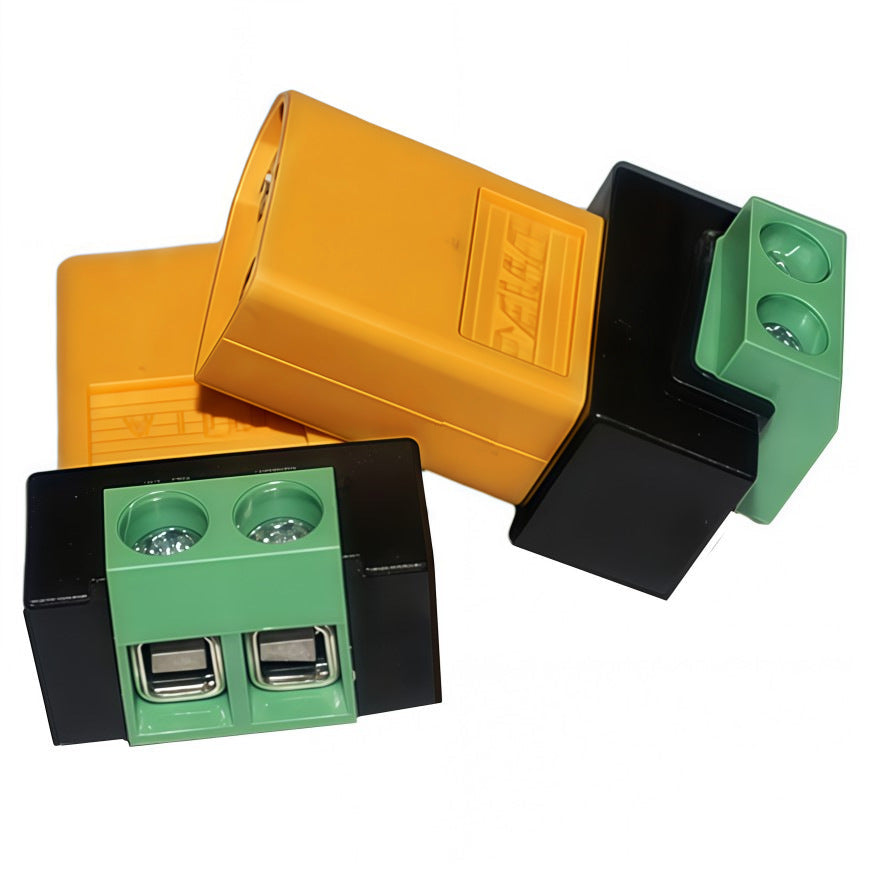
Connect bare power wires to an XT60-compatible connection without soldering using this XT60 male to 2-pin screw terminal power adapter.
The adapter features an XT60 male connector on one side and a green 2-pin screw terminal block on the other. Simply insert the stripped positive and negative wires into the terminal openings and tighten the screws to create a secure removable connection.
This is a passive power-only adapter. The voltage supplied to one side passes directly through to the other side without conversion or regulation.
Key features:
• XT60 male connector
• 2-pin screw terminal connection
• Solder-free wire installation
• Supports power transmission only
• Bidirectional straight-through connection
• Maximum stated current: 10A
• Maximum stated voltage: 300V
• Accepts copper wire up to approximately 14 AWG
• Reusable screw-clamp design
• PVC connector housing
• Compact design for temporary or permanent wiring
Typical applications:
• RC models and drones
• Battery and power-system wiring
• Portable power and energy-storage projects
• DC equipment and test setups
• Temporary power connections
• Motor, inverter and electronic equipment wiring
• DIY power-distribution projects
Installation:
Strip a suitable length of insulation from each wire.
Insert the positive and negative conductors into the correct screw-terminal openings, then tighten both screws securely.
Check the polarity and confirm that no exposed copper can contact the opposite terminal before connecting the XT60 plug.
Important safety information:
• Confirm that you require an XT60 male connector before ordering
• Check positive and negative polarity before applying power
• Reversed polarity may permanently damage batteries and connected equipment
• The adapter does not convert or regulate voltage
• The output voltage is the same as the input voltage
• Do not exceed the stated current or voltage rating
• Current capacity may also be limited by the connected wire, equipment and installation
• This adapter does not provide battery charging control, cell balancing, overcurrent protection or short-circuit protection
• Do not use it as a substitute for a dedicated battery charger or balance charger
• Ensure all terminal screws are tight before use
• Disconnect the power before fitting or removing wires