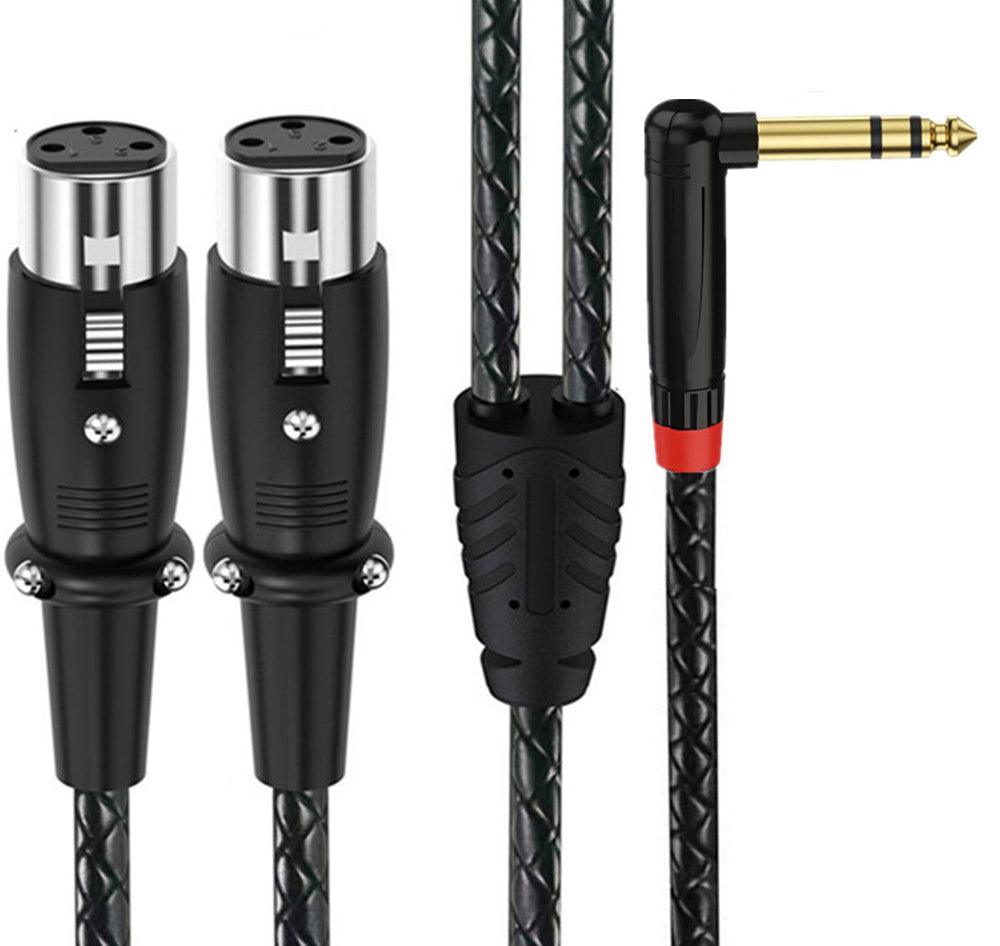
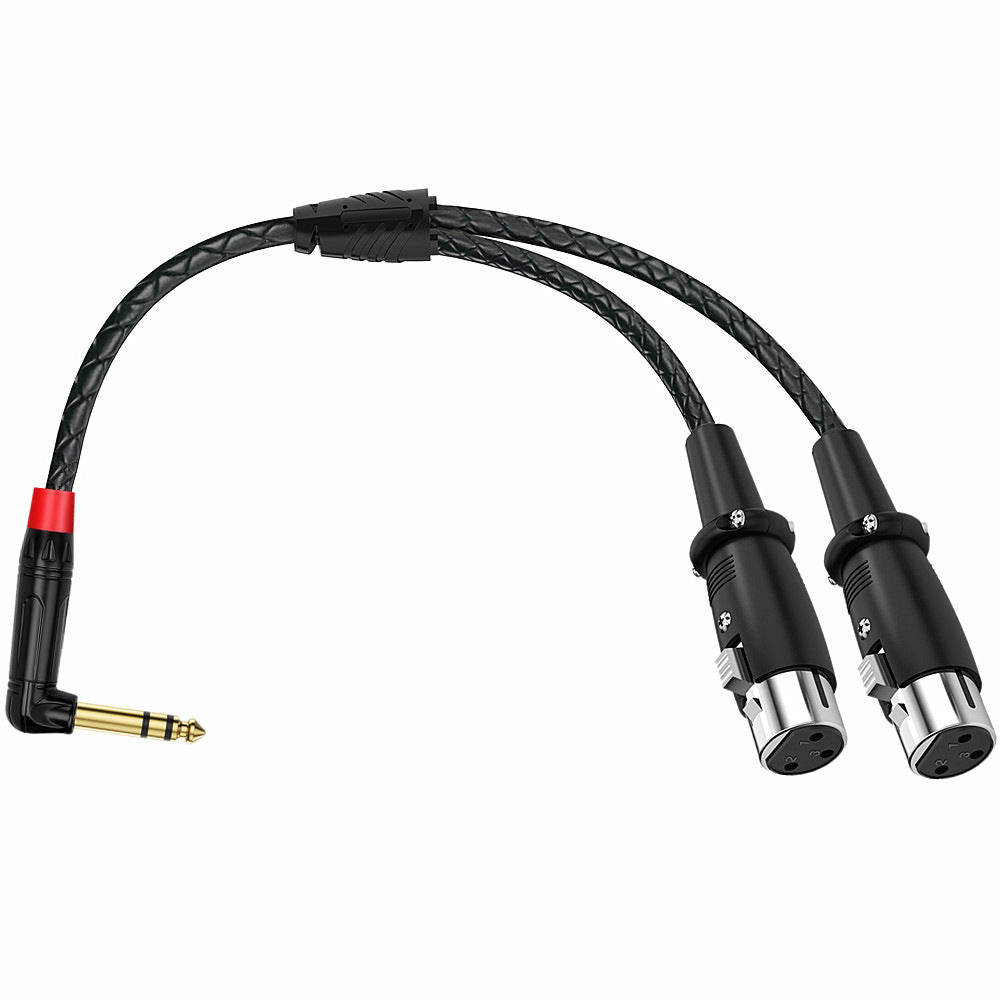
Connect a compatible 6.35mm TRS stereo output to two separate XLR male inputs with this right-angle 6.35mm TRS male to dual 3-pin XLR female audio breakout cable.
The cable features one space-saving 90-degree 6.35mm (1/4-inch) TRS male plug at the source end and two straight 3-pin XLR female connectors at the other. It is designed to separate the left and right channels from a compatible stereo TRS output for connection to mixers, powered monitors, amplifiers and other professional audio equipment.
The right-angle jack design helps reduce cable strain and is useful for equipment positioned close to a wall, inside a rack or in a restricted installation space. A braided outer jacket and reinforced Y-splitter section provide added durability for studio, stage and live sound use.
Key features:
• Right-angle 6.35mm TRS stereo male plug
• Dual straight 3-pin XLR female connectors
• Separates a compatible stereo signal into left and right mono channels
• Space-saving 90-degree jack design
• Locking XLR female connectors
• Braided outer cable jacket
• Reinforced moulded Y-splitter section
• Suitable for compatible studio, stage and professional audio equipment
• Available in 0.5m, 1.8m and 3m lengths
Typical applications:
• External sound cards and audio interfaces
• Electronic keyboards and synthesisers
• Digital pianos and audio players
• Portable mixers and effects processors
• Professional mixing desks
• Powered studio monitors and stage amplifiers
• Recording, livestreaming and live sound systems
Important compatibility information:
The 6.35mm source connection must provide a standard unbalanced stereo TRS signal:
• Tip: left audio channel
• Ring: right audio channel
• Sleeve: common ground
Each XLR female connector carries one unbalanced mono channel. This cable does not create two fully balanced XLR signals from a stereo TRS output.
Do not use it with a balanced mono TRS output unless the required pinout and application have been confirmed. Incorrect use may result in reduced volume, phase cancellation or incorrect signal routing.
This is a passive breakout cable. It does not amplify, balance, isolate or process the audio signal.